How much does a roof replacement cost in Chicago’s southwest suburbs? At ASI Construction, average roof replacement costs for a 2,200-square-foot home with architectural asphalt shingles run roughly $14,800 to $19,400 in 2026. If that’s financed over 24 months through Improvifi, it comes to about $620 to $810 a month. Roof size, pitch, material, old shingle layers, and decking condition determine where your home falls within that range.
Many homes in Plainfield, Oswego, New Lenox, and Lockport were built in the 1990s and 2000s. Their original roofs are now 20 to 30 years old, which puts many of them at or past the expected life of an asphalt roof. Knowing what the average covers, what moves a quote, and how the cost holds value at resale makes it easier to compare estimates line by line before you decide.
What the Average Roof Replacement Cost Includes
A realistic average covers the full job, not just new shingles. That means tear-off of the old roof, disposal, new underlayment, ice and water barrier along the eaves and valleys, drip edge, flashing, ridge caps, and ventilation that matches the attic. Permit fees and cleanup should be in the number, too.
What an average usually leaves out is anything hidden until the tear-off. Rotted or soft decking is the most common example. Extra layers of old shingles, upgraded ventilation, and new gutters can also sit outside the base price. A low quote that skips tear-off, ventilation, or permits is not a lower price for the same job. It is a smaller job.

Average Roof Replacement Costs by Home Size and Material
Roof replacement pricing in the Chicago area is based on roof area, not floor space. A two-story home has less roof than a ranch with the same square footage, and a steep or cut-up roof has more. Home size is still a useful starting point because it gives a rough idea of how many squares of material the job needs.
Material is the second big driver. Architectural asphalt is the material most homeowners compare first. Metal and Brava® synthetic tile cost more up front and are chosen for longer life and lower upkeep. Each range assumes a standard tear-off of one existing layer.
Ranges by Home Size
| Home Size | Architectural Asphalt, 2026 |
| 1,800 sq ft | $12,400 to $16,300 |
| 2,200 sq ft | $14,800 to $19,400 |
| 2,800 sq ft | $18,300 to $24,100 |
Smaller homes with simple gable roofs land toward the low end. Larger homes, or homes with several roof planes, sit higher. A two-story 2,800-square-foot home often has less roof surface than a 2,200-square-foot ranch, because its footprint is smaller. That is why square footage alone never sets the price.
Ranges by Material
| Material | Expected Life | 2026 Range (2,200 sq ft home) |
| Architectural asphalt | About 30 years | $14,800 to $19,400 |
| Metal | 40 to 80 years | $24,100 to $31,600 |
| Brava synthetic tile | 50-plus years | $32,000 to $52,000 |
InterNACHI’s life expectancy chart lists architectural asphalt at about 30 years and metal at 40 to 80 years, based on normal maintenance and wear. Brava synthetic tile offers the look of slate or cedar shake in a lightweight, low-maintenance product. For most homeowners, the real comparison is cost per year of service, not the sticker price. See nachi.
A Worked Example: A 2000s Two-Story in Plainfield
Consider a 2,200-square-foot two-story home in Plainfield built in 2003. It still has its original architectural shingles, now 23 years old. There is one layer, a moderate pitch, two valleys, and no skylights. Granules are collecting in the gutters, and a few shingles have lifted after a recent windstorm. A home like this falls inside the $14,800 to $19,400 range. If the tear-off reveals six soft decking sheets, they are added at the per-sheet price listed on the written estimate. The same math applies to similar homes in Oswego and New Lenox.
From Cost per Square to Total Price
Roofers measure in squares. One roofing square equals 100 square feet of roof surface, so a roof with 2,600 square feet of surface is 26 squares. Contractors add a waste factor, often 10 to 15 percent, for cuts at hips and valleys. That total is multiplied by the installed price per square. Tear-off, disposal, and accessories like ridge vents are either built into that rate or listed as separate lines.
What Moves the Average
Two homes on the same street can get quotes thousands of dollars apart, even when the same developer built them in the same year. The difference usually comes down to what sits under and around the shingles. One owner may have added a skylight. One roof may have a second layer from a past repair. One attic may have poor airflow, which can shorten the life of the decking.
Contractors also price the scope differently. One quote may include an ice and water barrier in every valley, while another covers only the eaves. One may include permits and disposal, and another may add them later. Comparing the scope, line by line, explains most price gaps.
Pitch, Layers, Valleys, and Skylights

A steep roof needs more safety equipment and labor time, so it costs more per square than a walkable one. Each extra layer of old shingles adds tear-off labor and disposal weight. Valleys, dormers, and skylights each need cutting, flashing, and extra waterproofing. A simple gable roof with no penetrations is the least expensive shape to replace. A roof with four valleys and two skylights takes more time and material at each of those points.
When Damaged Decking Changes the Price
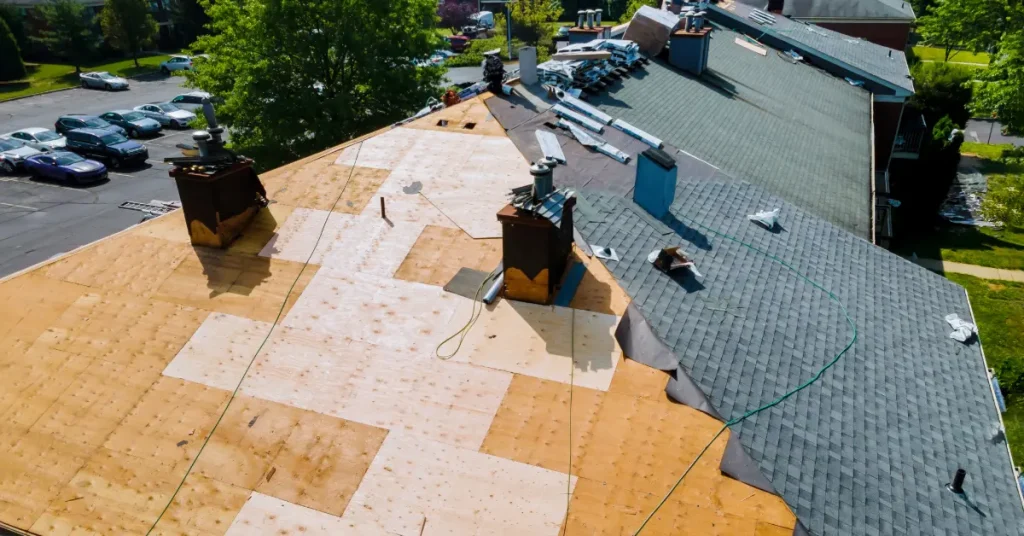
Decking is the plywood or OSB under the shingles. No one can confirm its condition until the old roof comes off. Soft, rotted, or delaminated sheets must be replaced before new shingles go on, or the new roof will not hold fasteners properly. A clear estimate lists decking as a per-sheet price, so the cost is known before work starts. Homes with past leaks or weak attic ventilation are more likely to need it.
Gutters and Permits
ASI installs gutters only as part of a roof replacement. Pairing the two lets the crew handle the roof edge, drip edge, and gutters in one project. It adds the gutter cost to the total, so it should appear as its own line on the estimate. Permits come from your village or city, or from Will County or Cook County in unincorporated areas. Fees and review times vary by town and can add a few days to the schedule.
Value and Asset Protection
For most homeowners, the house holds a large share of their net worth. A roof replacement protects that asset and shows up at resale. In the 2025 Cost vs. Value Report, an asphalt shingle roof replacement in Chicago had a $28,454 job cost and recouped 66.9 percent at resale, while a metal roof cost $46,332 and recouped 43.7 percent. See jlconline.
Warranty coverage adds to that value. As an Owens Corning® Platinum Preferred Contractor, ASI can offer a 50-year non-prorated warranty that transfers to the next owner. Non-prorated means coverage does not shrink each year. A transferable warranty is a document that a buyer and their inspector can review, which removes one common question at closing.
Replace Now or Keep Repairing a 25-Year-Old Roof?
A 25-year-old asphalt roof is close to the end of its expected life. Repairs on a roof that age fix one spot, but do not reset the clock on the rest of the shingles. Over 20 years, a homeowner who keeps patching often pays for several repairs and then a full replacement anyway, usually at a higher future price. Replacing now means one cost, a new warranty period, and two decades without the roof being an open question. Repairs still make sense on a younger roof with isolated damage.
The Cost of Waiting
A roof past its service life rarely fails all at once. It fails in small steps that get more expensive. A small leak left for 90 days can turn a several-hundred-dollar repair into a multi-thousand-dollar decking and mold job. Each winter of freeze and thaw opens worn seams a little more.
Signs a 1990s or 2000s roof is at the end of life include:
- Curling, cupping, or cracked shingles
- Heavy granule buildup in gutters or downspouts
- Bare or dark patches where granules are gone
- Water stains on ceilings or attic sheathing
- Daylight through the attic boards
- Shingles lifting or missing after wind
Two or more of these signs are a good reason to get a dated record of condition and a number to plan around.
Paying for It: Financing and Insurance
ASI offers roof financing through Improvifi. On a $14,800 to $19,400 project financed over 24 months, payments run about $620 to $810 a month at the current APR. Longer terms lower the monthly payment and raise the total interest paid. Approval and rates depend on credit and income, so the exact figure comes from the Improvifi application.
Insurance is a separate question. A homeowner’s policy may cover a roof damaged by a sudden event like hail or wind. It typically does not cover wear, age, or neglect. The order matters: document the damage with photos, file with your insurer, then schedule the repair. ASI provides the documentation your adjuster needs. Your insurer decides what is covered.
Vetting the Quote
A written line-item estimate is the only way to compare contractors fairly. Each quote should show roof area in squares, material, tear-off and disposal, underlayment, ice and water barrier, ventilation, flashing, per-sheet decking price, permits, and the warranty name and length.
Credentials matter as much as price. Look for an Owens Corning Platinum Preferred Contractor, the manufacturer’s top installer credential, and a Brava authorized installer for synthetic tile. Confirm the Illinois roofing license through the IDFPR license lookup, check the BBB rating, and ask for proof of insurance. If a contractor cannot name its manufacturer’s credentials or license number, keep comparing.
Get the Number for Your Roof
Averages are a starting point. Your price depends on pitch, layers, decking condition, and ventilation, and those can only be confirmed on site. An ASI inspection follows a set process: we measure the roof, photograph every slope, check attic ventilation, and email a written line-item estimate within 48 hours. You decide what to do next.
Once you have the number, compare it line by line with any other quotes, check the monthly payment against your budget, and choose a timeline that fits your plans.
ASI is an Owens Corning Platinum Preferred Contractor and a Brava authorized installer. We are Illinois licensed and insured (License #104.017822 & 105.008909), hold an A+ BBB rating, and have completed 1,000-plus projects across Plainfield, Oswego, New Lenox, Lockport, and the surrounding southwest suburbs.